
Delving into the world of air conditioner repair, this guide offers a detailed look at common issues, diagnostic methods, repair processes, and whether to DIY or seek professional help. Get ready to uncover the secrets of keeping your AC unit in top shape!
Common Air Conditioner Problems
When it comes to air conditioners, there are several common problems that may require repair. Understanding these issues can help you troubleshoot and address them promptly to ensure your unit continues to function efficiently.
1. Refrigerant Leaks
Refrigerant leaks can cause your air conditioner to blow warm air or fail to cool your space adequately. If you notice a decrease in cooling performance, it's essential to have a professional inspect your unit for leaks and recharge the refrigerant.
2. Electrical Control Failure
Electrical issues, such as faulty wiring or capacitor problems, can lead to your air conditioner not turning on or cycling erratically. These problems require expert attention to prevent further damage to the unit.
3. Sensor Problems
Sensors in the air conditioner are responsible for detecting room temperature and signaling the unit to adjust its cooling output. Malfunctioning sensors can cause the unit to run continuously or shut off prematurely, affecting comfort levels in your space.
4. Dirty Filters
Clogged or dirty filters restrict airflow, reducing the efficiency of your air conditioner. Regular filter cleaning or replacement is crucial to maintain optimal performance and prevent strain on the unit.
5. Drainage Issues
Clogged condensate drains can lead to water leaks or moisture buildup in the air conditioner, creating a breeding ground for mold and mildew. Regular maintenance to clear drainage lines is essential to prevent these issues.
Effect of Weather Conditions
Weather conditions can significantly impact the performance of your air conditioner. Extreme heat can cause the unit to overwork, leading to potential breakdowns or system failures. On the other hand, high humidity levels can affect the unit's ability to dehumidify the air, reducing comfort levels indoors.
Complexity of Repairs
Repairs for different types of air conditioning units can vary in complexity. Window units are typically easier to troubleshoot and repair, as they are self-contained systems with simpler components. In contrast, central air conditioning systems involve a more intricate network of ducts, vents, and components, requiring specialized knowledge and tools for repairs.
Diagnosing Air Conditioner Issues
When your air conditioner is not working properly, it is important to diagnose the issues accurately to ensure effective repairs. Regular maintenance can help prevent major problems from occurring, saving you time and money in the long run.
Step-by-Step Methods for Diagnosing Problems
- Check the thermostat settings to make sure they are correctly set for cooling.
- Inspect the air filter and replace it if it is dirty or clogged, as this can restrict airflow.
- Examine the condenser unit outside to ensure it is not blocked by debris such as leaves or dirt.
- Inspect the refrigerant levels to make sure there are no leaks that could be affecting cooling performance.
- Check the electrical connections to ensure they are secure and functioning properly.
Importance of Regular Maintenance
Regular maintenance of your air conditioner can help prevent major repair issues by addressing small problems before they escalate. By cleaning or replacing air filters, checking refrigerant levels, and inspecting the overall system, you can ensure that your air conditioner operates efficiently and effectively.
Examples of Tools Needed for Diagnosing Common Problems
- Thermometer to check the temperature of the air coming out of the vents.
- Multimeter to test electrical connections and components.
- Refrigerant leak detector to identify any leaks in the system.
- Condenser coil cleaner to remove debris and dirt from the outdoor unit.
Air Conditioner Repair Process
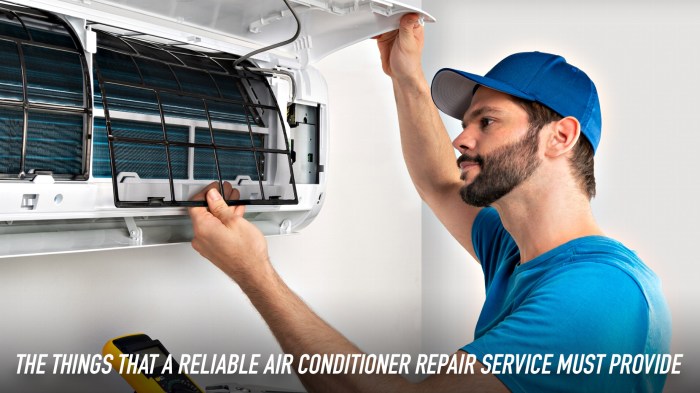
Repairing an air conditioner involves a series of steps to identify and fix issues that may be causing the unit to malfunction. It is important to follow a systematic approach to ensure the problem is properly diagnosed and resolved.
Role of Each Component in the Repair Process
- The thermostat: Controls the temperature settings and signals the air conditioner to turn on or off based on the desired temperature.
- The condenser unit: Located outside, it houses the compressor, condenser coils, and a fan to help dissipate heat from the refrigerant.
- The evaporator coils: Situated inside the home, these coils absorb heat from the indoor air and cool it down before circulating it back into the room.
- The refrigerant: A chemical compound that absorbs and releases heat to cool the air inside the air conditioner.
- The compressor: Responsible for compressing the refrigerant gas to increase its temperature before it flows to the condenser coils.
Safety Precautions during Air Conditioner Repairs
- Always turn off the power supply before attempting any repairs to avoid the risk of electric shock.
- Wear protective gear, such as gloves and safety glasses, to protect yourself from sharp edges and potential refrigerant leaks.
- Avoid working on the air conditioner alone, especially when handling heavy components that may require assistance.
- Follow manufacturer's guidelines and instructions carefully to prevent damage to the unit or injury to yourself.
- Regularly inspect the air conditioner for any signs of wear and tear to address minor issues before they escalate into major problems.
DIY vs. Professional Repair
When it comes to air conditioner repairs, homeowners often find themselves debating whether to tackle the issue themselves or seek professional help. Both DIY repairs and professional services have their own set of advantages and disadvantages, depending on the complexity of the problem and the individual's skill level.
Advantages and Disadvantages of DIY Air Conditioner Repairs
- Advantages:
- Cost-effective as you save on labor charges.
- Immediate action can be taken without waiting for an appointment.
- Empowering to learn new skills and gain a sense of accomplishment.
- Disadvantages:
- Risk of causing further damage if not done correctly.
- Lack of expertise may result in incomplete repairs or misdiagnosis of the issue.
- No warranty or guarantee on the work done.
When to Seek Professional Help for Air Conditioner Repairs
- If the issue is complex or requires specialized tools and knowledge.
- When previous DIY attempts have failed to resolve the problem.
- If the air conditioner is still under warranty to avoid voiding it with DIY repairs.
Tips for Finding a Reliable and Qualified Air Conditioner Repair Service
"Finding the right professional for air conditioner repairs is crucial for ensuring the job is done correctly and efficiently."
- Ask for recommendations from family, friends, or neighbors who have used air conditioner repair services.
- Check online reviews and ratings of local repair companies to gauge their reputation.
- Inquire about the technician's certifications, experience, and insurance coverage before hiring them.
- Get multiple quotes from different repair companies to compare prices and services offered.
- Avoid choosing solely based on the lowest price, as quality of work should be the primary consideration.
Ending Remarks
In conclusion, mastering the art of air conditioner repair can save you time, money, and discomfort. By understanding the ins and outs of troubleshooting and maintenance, you can ensure your unit stays cool and efficient all year round. Stay cool and repair savvy!
Popular Questions
What are some common air conditioner problems?
Common issues include refrigerant leaks, sensor problems, and electric control failure.
When should I consider seeking professional help for air conditioner repairs?
If you're unsure about diagnosing the problem, dealing with electrical components, or handling refrigerants, it's best to call a professional.
What tools are needed for diagnosing air conditioner problems?
Tools like a multimeter, thermometer, and refrigerant leak detector are essential for diagnosing AC issues.